
LAD #39: Brown V. Board of Education

Brown v. Board of Education spurred national civil rights movements nationally. This was because the supreme court ruled unanimously that racial segregation was ruled unconstitutional. Previous rulings indicated that it was allowed to be segregated as long as it was separate but equal. Brown filed this against the board in Topeka Kansas because her daughter was denied entrance in a white school. The court ruled that segregated schools are inherently unequal and therefore not allowed. This was a major pillar that fell to aid civil rights.
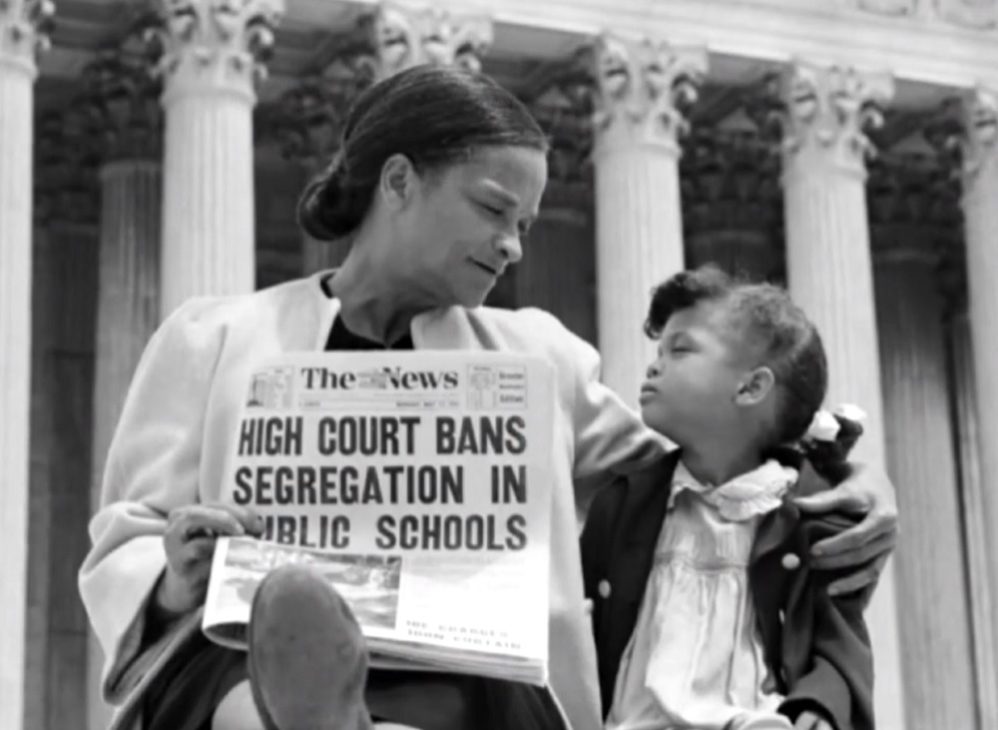
Image result for brown v board of education

Image result for plessy v ferguson

Comments

Popular posts from this blog

LAD/Blog #9: Was Columbus a hero or villian?

Was Christopher Columbus a Hero or a Villain? He was neither--what he actually was is incredibly, breathtakingly, extremely lucky...do you get what I'm trying to say? He was really just lucky, as he intended to go the . But in the context of your assignment, he was both a hero and a villain, but the discovery of a continent pales in comparison to any evil feat he could manage to counteract it. Christopher Columbus was a hero because: He was the first European to discover the Americas (no offense Leif Erikson, but yours really doesn't count)  Introduced Christianity to the New World Enabled European control and colonization of the Americas Opened trade between worlds new and old (and Africa), eventually leading to the Columbian Exchange, which ruled the era's commerce Since I'm writing this from Washington D.C. , it seems wrong not to add that he indirectly lead to the formation of our great nation, the U.S.A.  He made an innumerable profit for Spain, but als...

LAD/Blog #2: John Peter Zenger Trial

1.)    Who was Peter Zenger? Peter Zenger was the printer of the New York Weekly Journal, and a critic of the governor at the time. 2.)   What was the controversy over his charges? Zenger was charged between seditious libel. The judge overseeing the case, among others, intended to  imprison Zenger despite the validity of the claims put forward. Zenger's lawyer, Andrew Hamilton, formulated the claim that what Zenger had been printing was not libelous if truthful. This was a nearly unbeatable defense and ultimately saved Zenger from imprisonment. 3.)   What influence did his case have on American governmental traditions? Hamilton's successful defense of Zenger provided a precedent for and affirmed freedom of the press within the developing nation. This precedent remains in order to enable those to freely criticize government without the fear of punishment. 4.)   What is the lasting significance of his trial? Zenge...

LAD/Blog #8: Washington's Farewell Address

As America's first president, many actions taken by George Washington are considered modern precedents in modern America. In his address, he set the precedent for a 2-term presidency to prevent abuse of power. Washington warns of the formation of factions in American politics, citing that it will lead to excessive disunity.  He believed this would weaken the US as a people. He mentions the importances of taxes and funding the government appropriately, and that even though its resented it is still necessary. As he progresses, he preaches neutrality and isolationism, and not to get involved in the petty conflicts of Europe. Washington ends this speech with thanks to the American people, who enabled his success. Washington's Farewell address Another precedent Washington set was a farewell address, as President Barack Obama's address is pictured here.